Overview
Tetzaveh is the twentieth Torah portion. Its name comes from the opening verse: "You shall command the sons of Israel, that they bring you pure oil of beaten olives for the light, to cause a lamp to burn continually." (Exodus 27:20)
Unlike previous portions, Moses' name is not mentioned in Tetzaveh. Instead, the focus shifts from the structure of the Tabernacle to the people who will serve within it — the priesthood. HaShem commands the Israelites to bring pure olive oil for the menorah so that its flame will burn continually in the Holy Place. This eternal light represents divine presence, watchfulness, and the calling of Israel to be a light before Him.
The central theme of the portion is the appointment and preparation of Aaron and his sons as kohanim (priests). They are chosen to serve as mediators between Israel and HaShem. Detailed instructions are given for their sacred garments — described as being made "for glory and for beauty," reflecting the dignity and weight of their calling.
The portion then outlines the seven-day ordination ceremony, including sacrificial offerings, anointing with oil, the application of blood to ear, thumb, and toe, and acts of consecration that set Aaron and his sons apart for holy service. HaShem also establishes the daily offerings — one lamb in the morning and one in the evening — as a continual burnt offering throughout generations.
The section concludes with instructions for the altar of incense, placed in the Holy Place, where fragrant incense would rise before HaShem as a symbol of prayer and devotion. Tetzaveh teaches that approaching HaShem requires preparation, purity, and appointed mediation. It emphasizes continual light, continual sacrifice, and continual devotion in the service of the Holy One.
Journal
HaShem commands that pure olive oil be brought for the menorah — a flame that burns continually before Him. Aaron and his sons are appointed as priests, set apart by magnificent garments woven of gold, blue, purple, and scarlet. The breastplate bears twelve stones for the twelve tribes, carried over Aaron's heart before the LORD. Through seven days of ordination — blood applied to ear, thumb, and toe — they are consecrated for holy service. Morning and evening, a lamb is offered as a continual burnt offering. The altar of incense rises as fragrant prayer. In all of this, HaShem declares: "I will dwell among the people of Israel and will be their God."
Scripture Readings
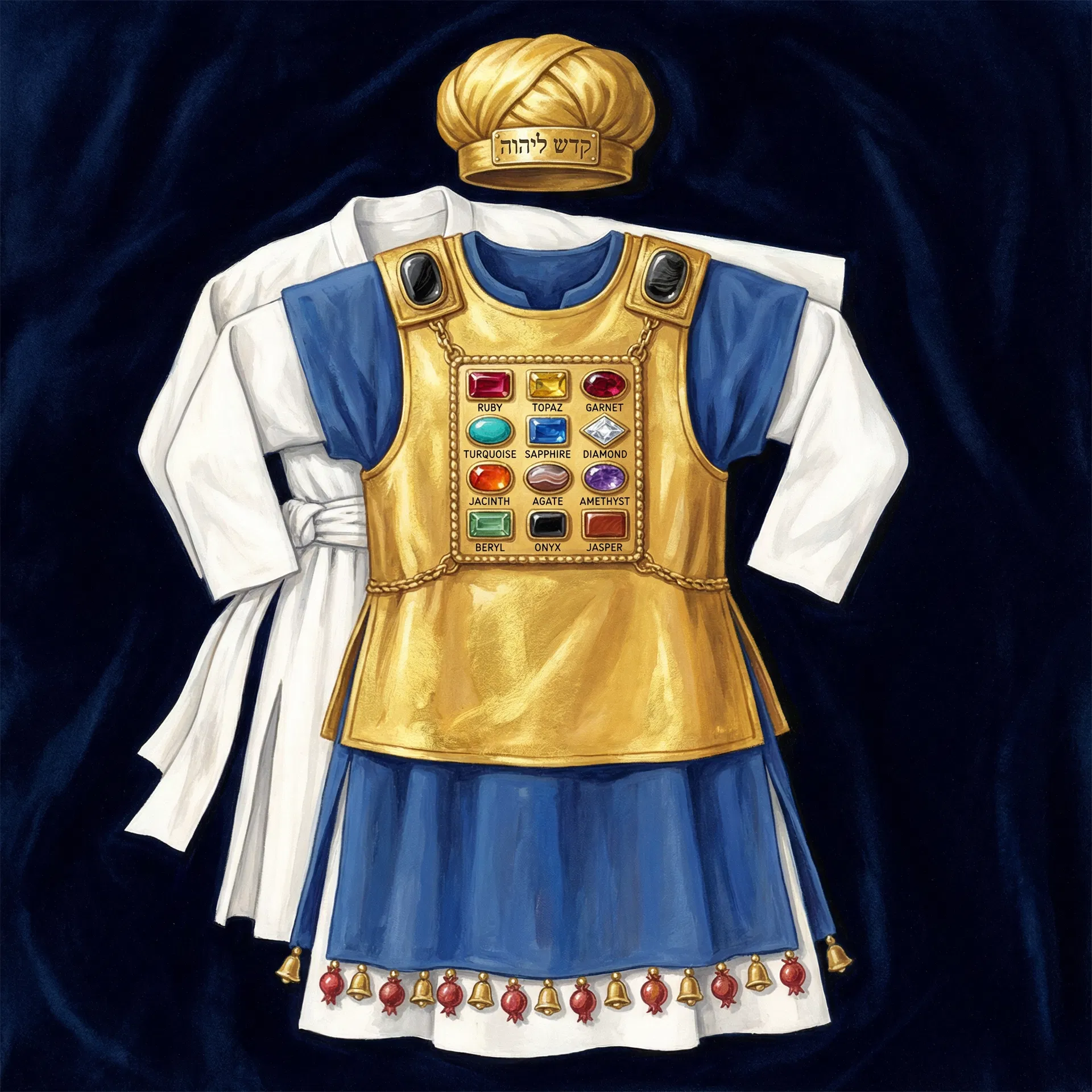
The Priestly Garments
Exodus 28 — Made for Glory and for Beauty
The Ephod
Exodus 28:6–14The outer vestment of the High Priest, woven of gold, blue, purple, and scarlet yarns with fine linen. Two onyx stones on the shoulder pieces bore the names of the twelve tribes — six on each — so that Aaron carried them before the LORD as a memorial.
The Breastplate (Choshen)
Exodus 28:15–30A square pouch bearing twelve precious stones in four rows, each engraved with the name of one of the twelve tribes. Aaron bore the names of Israel on his heart before the LORD. It also held the Urim and Thummim — instruments of divine judgment.
The Robe (Me'il)
Exodus 28:31–35An all-blue robe worn beneath the ephod, with golden bells and pomegranates alternating around its hem. The sound of the bells announced Aaron's entrance and exit from the Holy Place, so that he would not die.
The Golden Plate (Tzitz)
Exodus 28:36–38A plate of pure gold fastened to the front of the turban, engraved with the words "Holy to the LORD." Aaron bore on his forehead the guilt of any impurity in Israel's holy offerings, so that they might be accepted before HaShem.
The Turban (Mitznefet)
Exodus 28:39A fine linen turban worn by the High Priest, upon which the golden plate was fastened with a blue cord. Together with the coat of checker work and the sash, these garments were made "for glory and for beauty."
The Sash (Avnet)
Exodus 28:39–40An embroidered sash worn by both Aaron and his sons. The sons also received coats, sashes, and caps — all made for glory and beauty — to consecrate them for priestly service before HaShem.
Gallery
Images from the Tetzaveh Portion
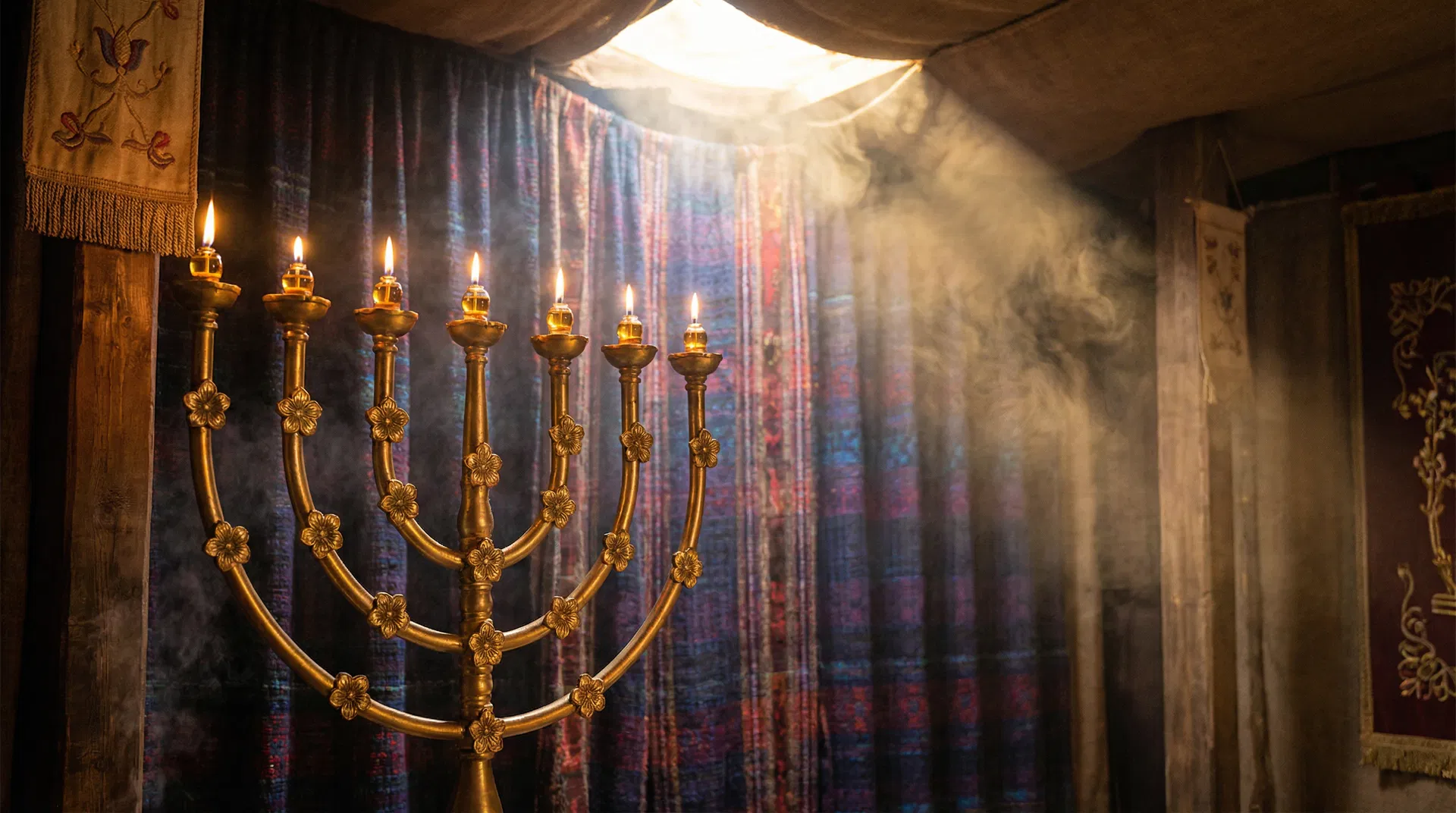
The Golden Menorah burning in the Tabernacle
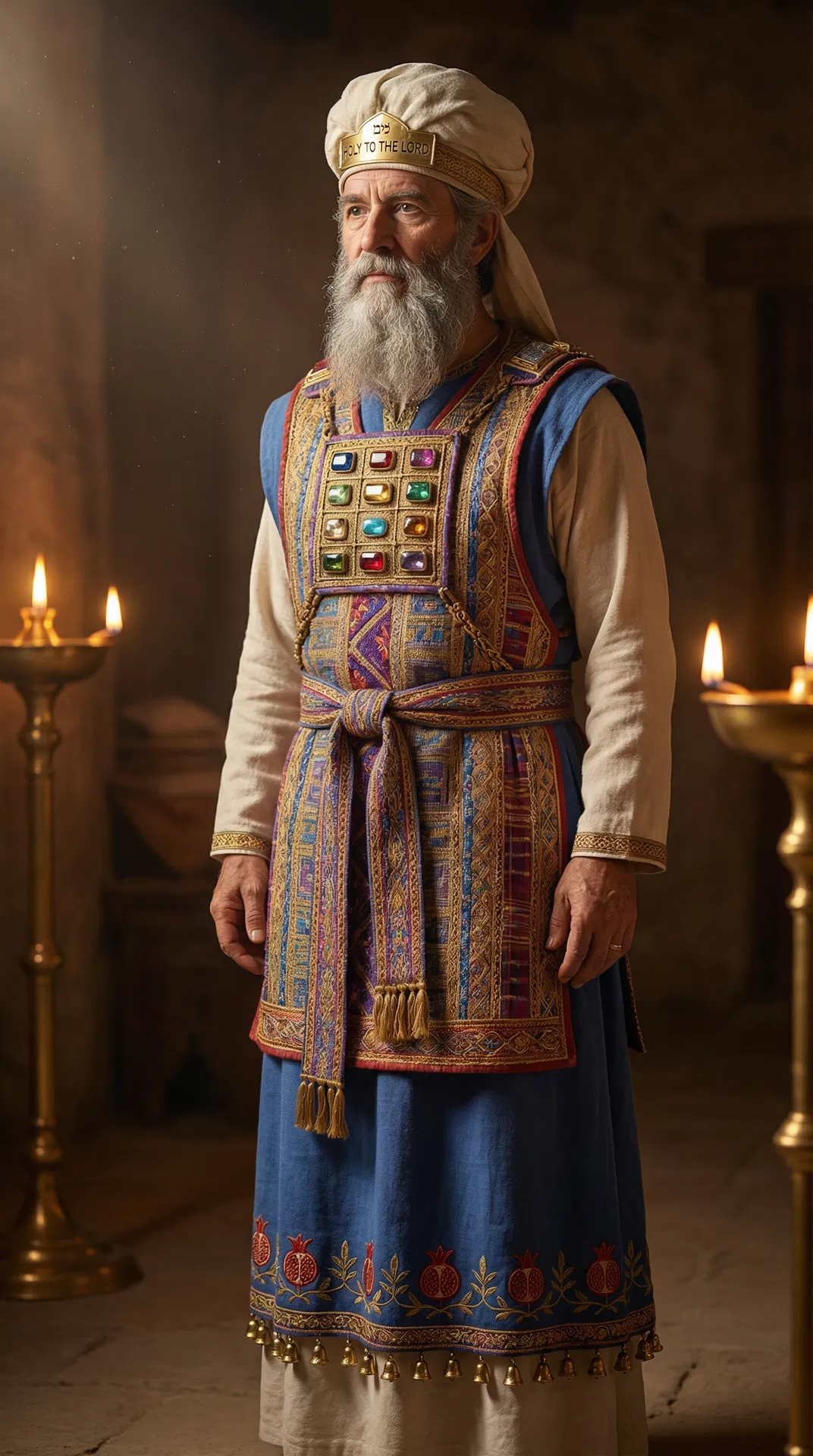
High Priest Aaron in Sacred Priestly Garments
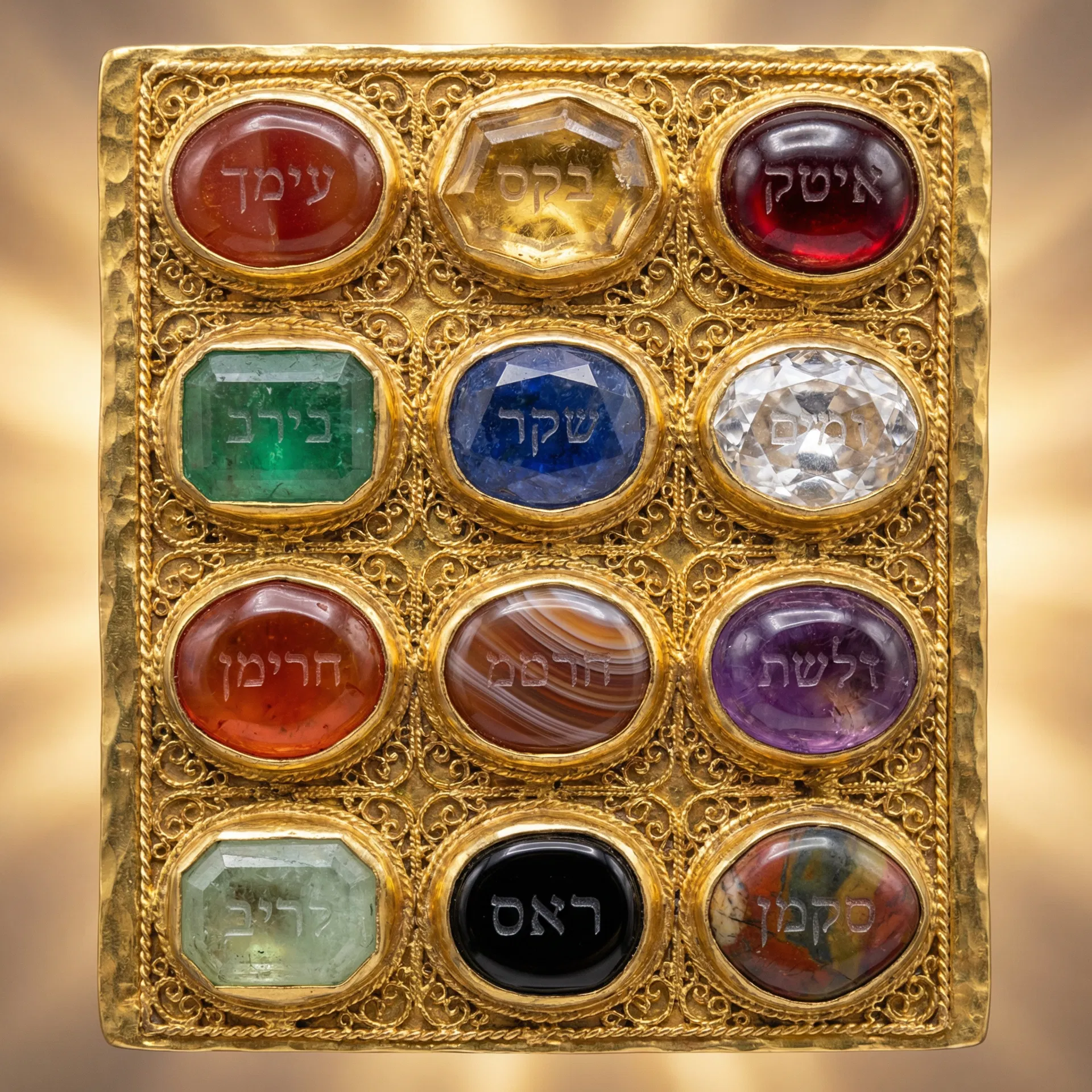
The Breastplate (Choshen) with Twelve Gemstones
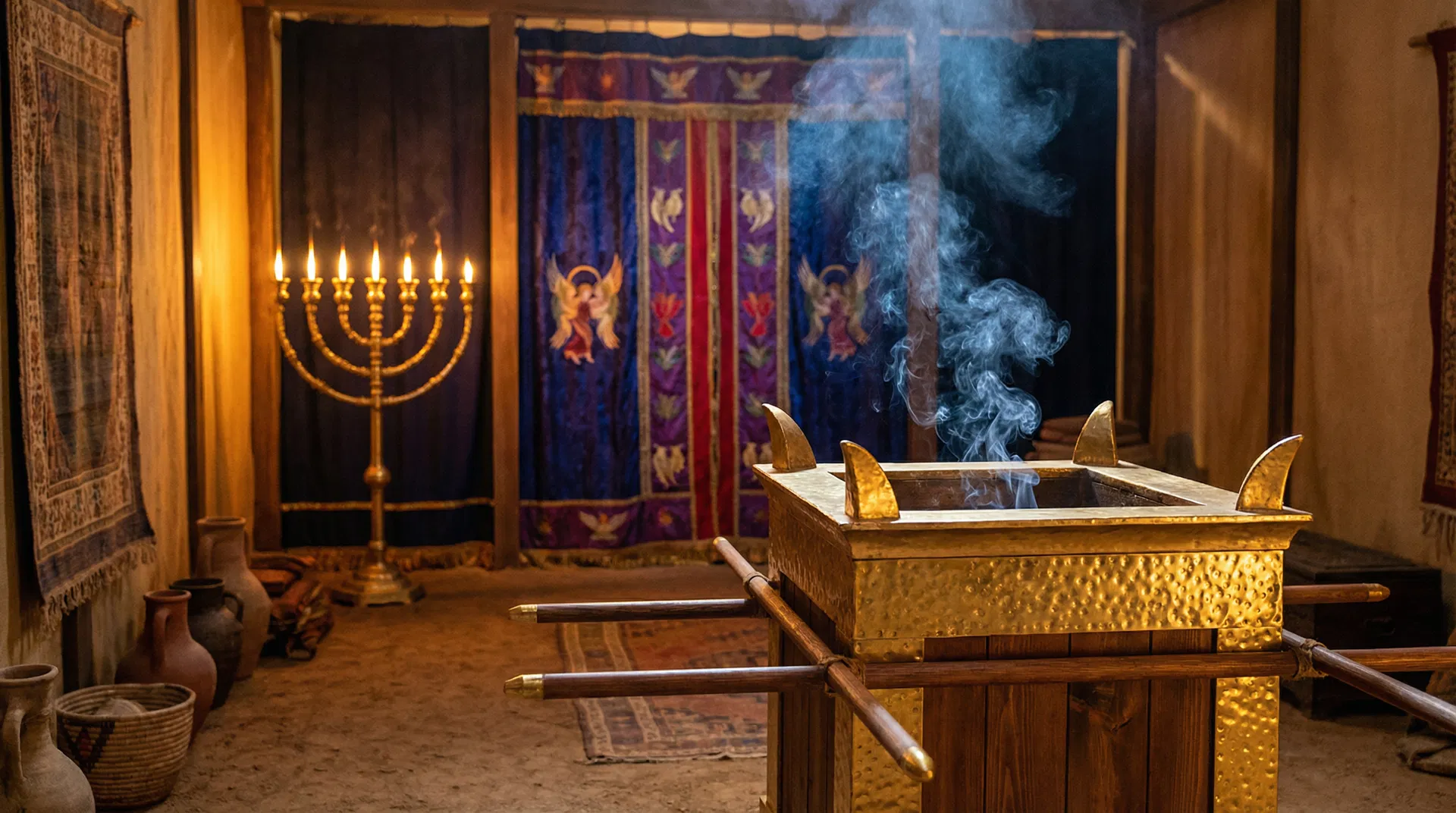
The Altar of Incense in the Holy Place
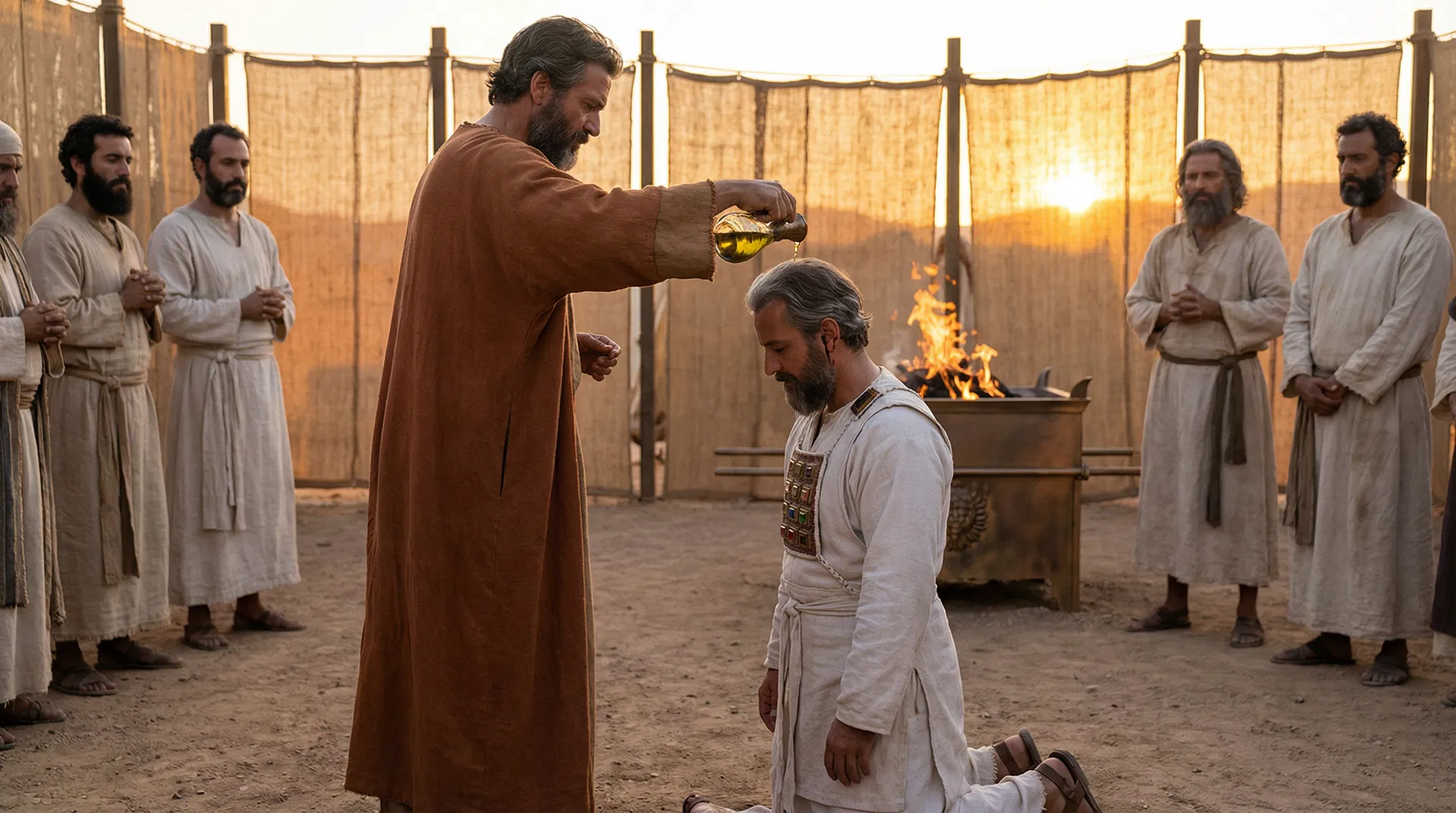
The Seven-Day Ordination of Aaron and His Sons

The Tabernacle in the Desert Wilderness
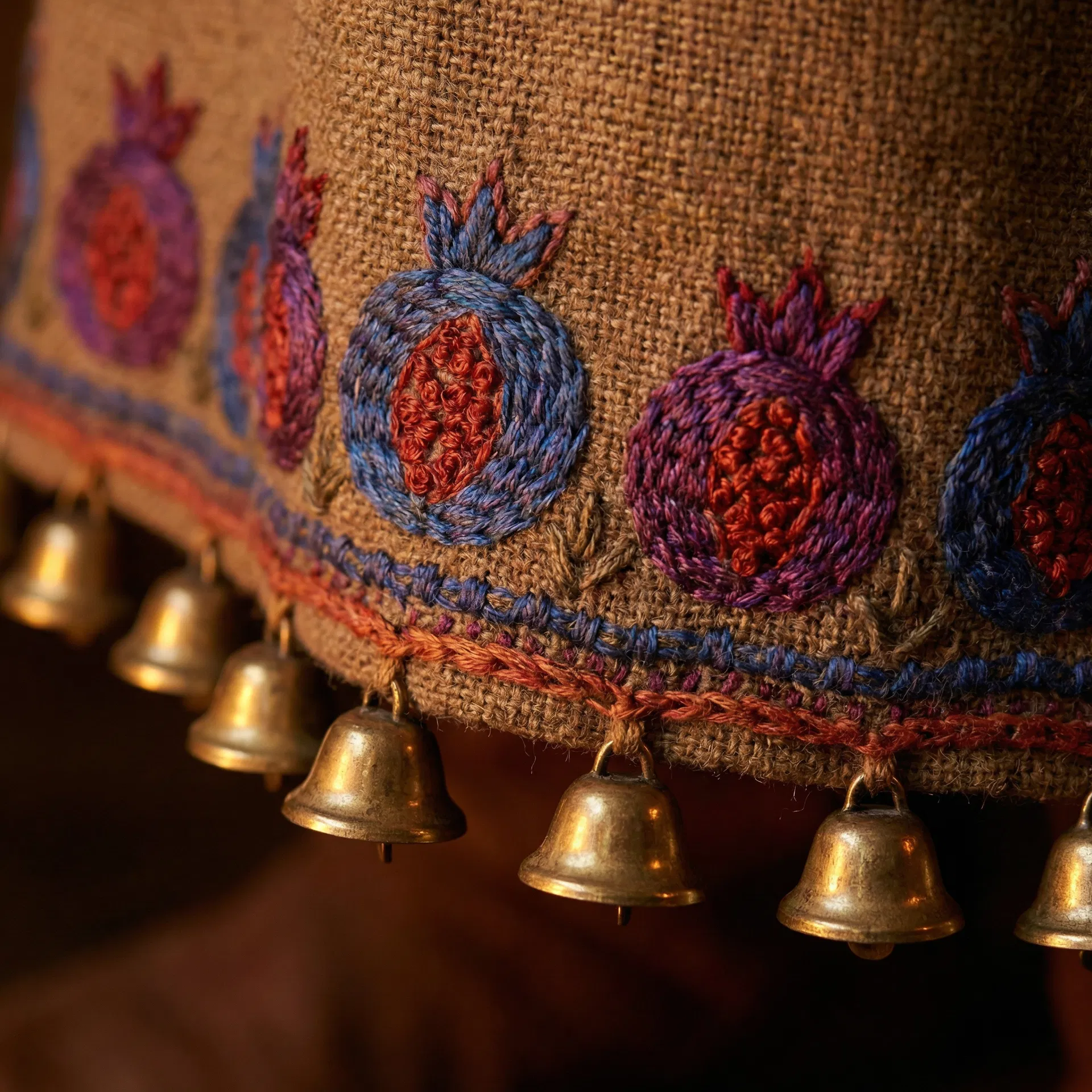
Bells and Pomegranates on the Priestly Robe
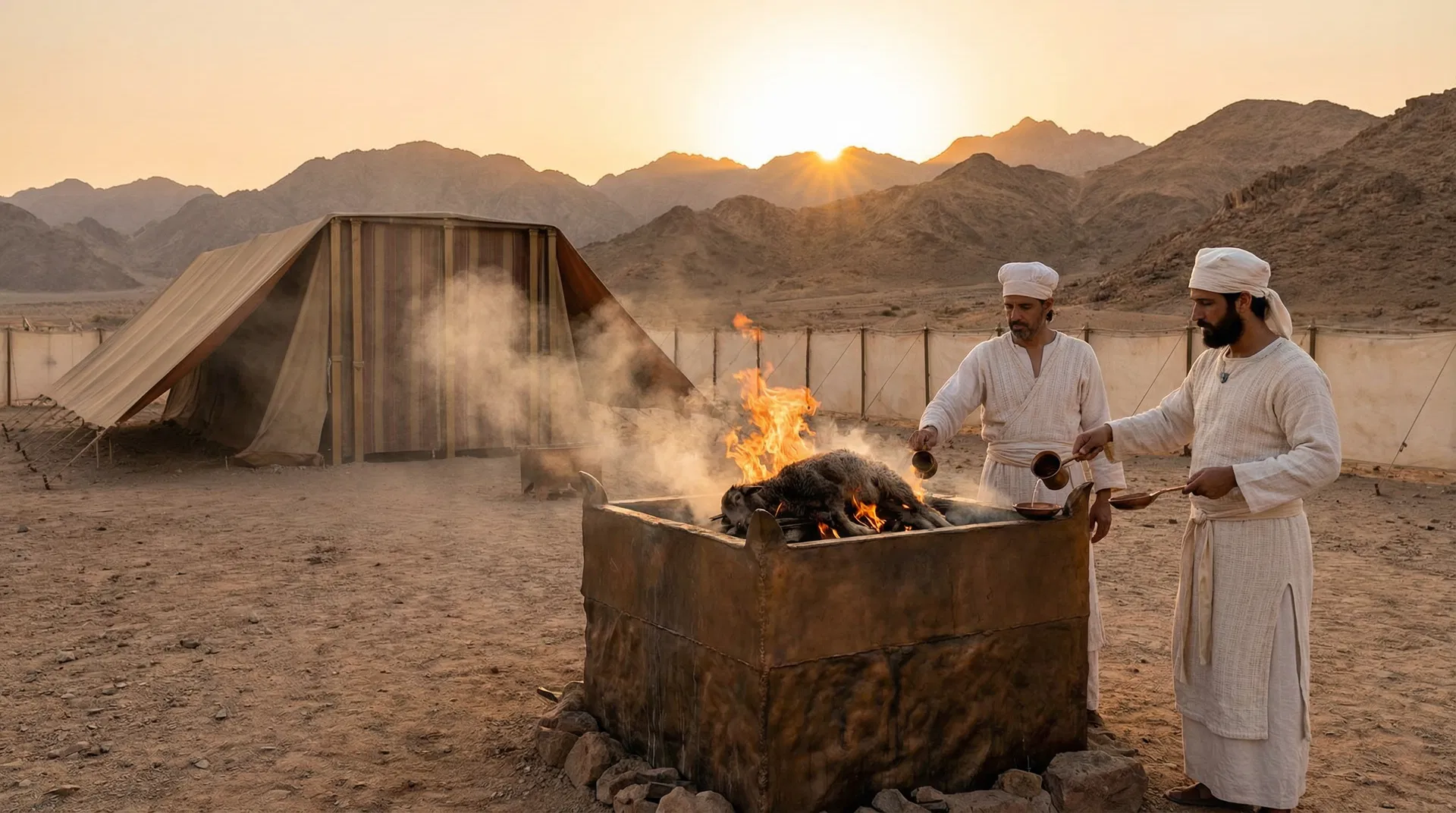
The Morning Burnt Offering at the Bronze Altar
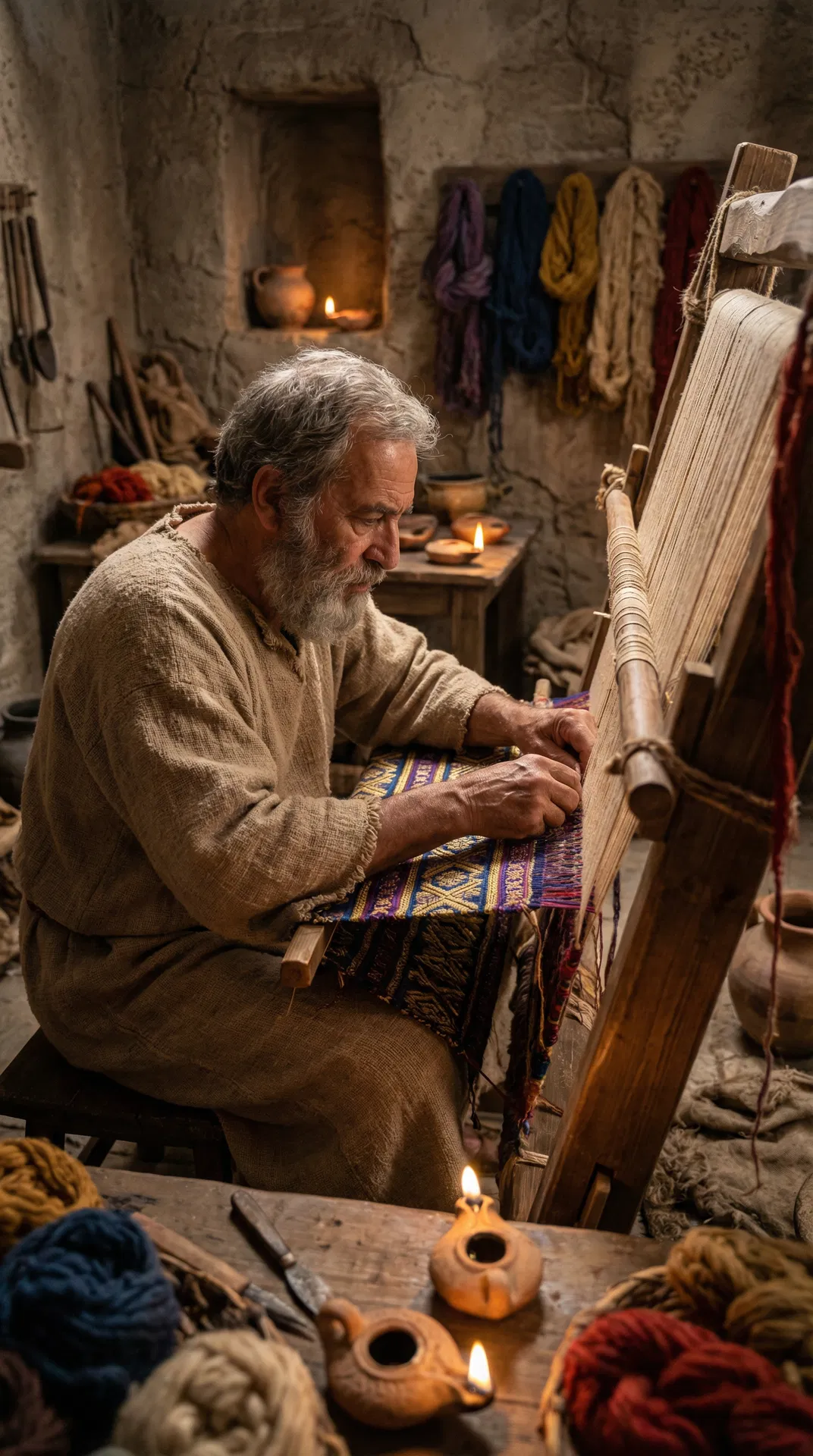
Artisan Weaving the Sacred Priestly Ephod
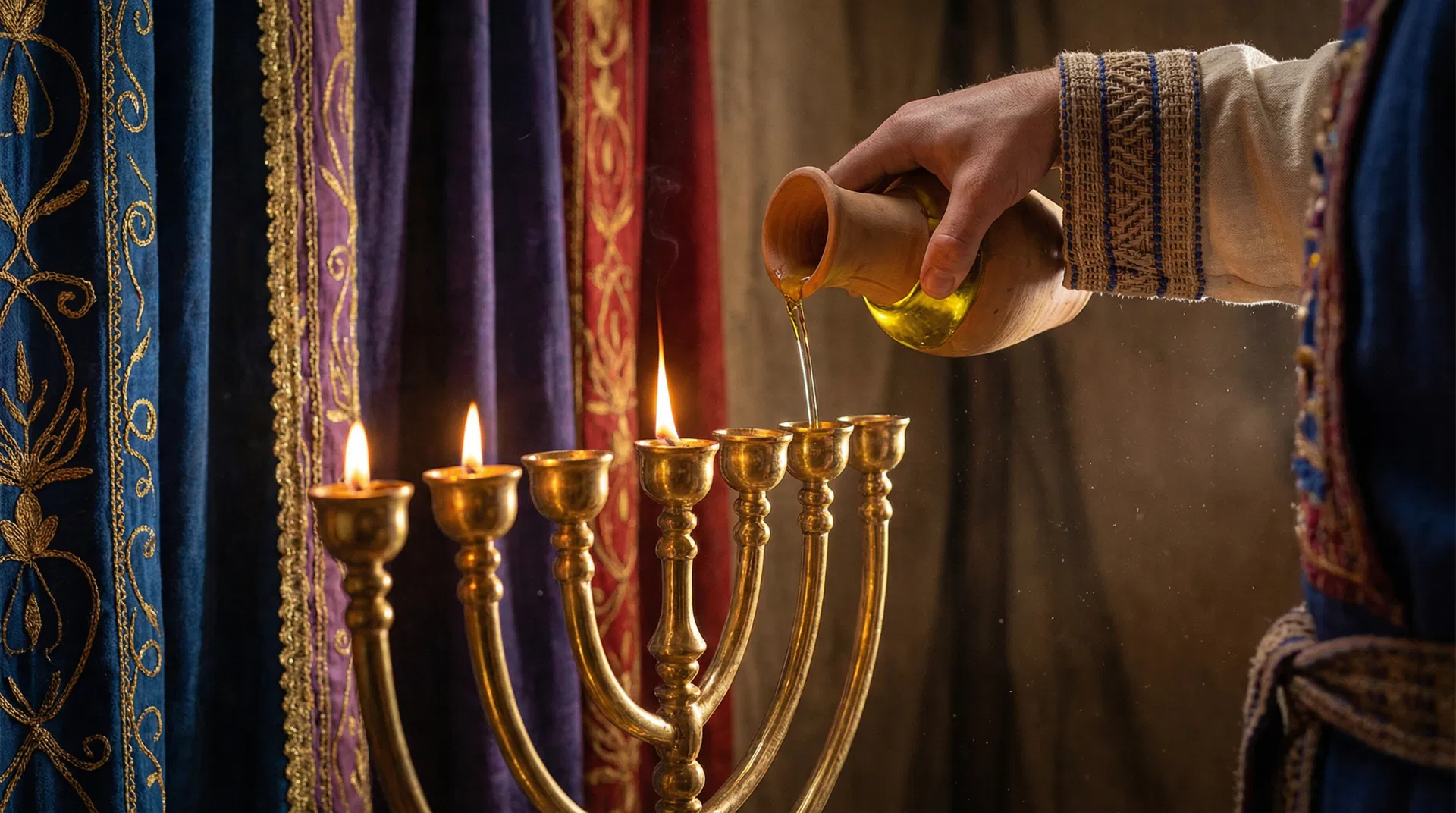
Pouring Pure Olive Oil into the Menorah Lamps
Join the Community
Deepen your understanding and connect with others studying the Torah portion in the Families in Torah community.
Visit Skool Community